Search This Blog

Showing posts with label Car. Show all posts

Wednesday, November 24, 2010

Car History and images

The first working steam-powered vehicle was probably designed by Ferdinand Verbiest, a Flemish member of a Jesuit mission in China around 1672. It was a 65 cm-long scale-model toy for the Chinese Emperor, that was unable to carry a driver or a passenger. It is not known if Verbiest's model was ever built.
In 1752, Leonty Shamshurenkov, a Russian peasant, constructed a human-pedalled four-wheeled "auto-running" carriage, and subsequently proposed to equip it with odometer and to use the same principle for making a self-propelling sledge.

Nicolas-Joseph Cugnot is often credited with building the first self-propelled mechanical vehicle or automobile in about 1769, by adapting an existing horse-drawn vehicle. However, this claim is disputed by some who doubt Cugnot's three-wheeler ever ran or was stable.[citation needed] In 1801, Richard Trevithick built and demonstrated his Puffing Devil road locomotive, believed by many to be the first demonstration of a steam-powered road vehicle. It was unable to maintain sufficient steam pressure for long periods, and was of little practical use. In the 1780s, a Russian inventor of merchant origin, Ivan Kulibin, developed a human-pedalled, three-wheeled carriage with modern features such as a flywheel, brake, Transmission, and bearings; however, it was not developed further. In 1807 Nicéphore Niépce and his brother Claude probably created the world's first internal combustion engine which they called a Pyréolophore, but they chose to install it in a boat on the river Saone in France. Coincidentally, in 1807 the Swiss inventor François Isaac de Rivaz designed his own 'internal combustion engine' and used it to develop the world's first vehicle, to be powered by such an engine. The Niépces' Pyréolophore was fuelled by a mixture of Lycopodium powder (dried Lycopodium moss), finely crushed coal dust and resin that were mixed with oil, whereas de Rivaz used a mixture of hydrogen and oxygen. Neither design was very successful, as was the case with others, such as Samuel Brown, Samuel Morey, and Etienne Lenoir with his hippomobile, who each produced vehicles (usually adapted carriages or carts) powered by clumsy internal combustion engines.
In November 1881, French inventor Gustave Trouvé demonstrated a working three-wheeled automobile powered by electricity at the International Exposition of Electricity, Paris.

Car
Car

Car
Car

Car
Car

Car
Car

Car
Car

Car
Car

Car
Car

Car
Car

Car
Car

Car
Car

Car
Car

Car
Car

Car
Car


Although several other German engineers (including Gottlieb Daimler, Wilhelm Maybach, and Siegfried Marcus) were working on the problem at about the same time, Karl Benz generally is acknowledged as the inventor of the modern automobile.
An automobile powered by his own four-stroke cycle gasoline engine was built in Mannheim, Germany by Karl Benz in 1885, and granted a patent in January of the following year under the auspices of his major company, Benz & Cie., which was founded in 1883. It was an integral design, without the adaptation of other existing components, and included several new technological elements to create a new concept. He began to sell his production vehicles in 1888.


In 1879, Benz was granted a patent for his first engine, which had been designed in 1878. Many of his other inventions made the use of the internal combustion engine feasible for powering a vehicle.
His first Motorwagen was built in 1885, and he was awarded the patent for its invention as of his application on January 29, 1886. Benz began promotion of the vehicle on July 3, 1886, and about 25 Benz vehicles were sold between 1888 and 1893, when his first four-wheeler was introduced along with a model intended for affordability. They also were powered with four-stroke engines of his own design. Emile Roger of France, already producing Benz engines under license, now added the Benz automobile to his line of products. Because France was more open to the early automobiles, initially more were built and sold in France through Roger than Benz sold in Germany.

Car
Car


Car History and images

The first working steam-powered vehicle was probably designed by Ferdinand Verbiest, a Flemish member of a Jesuit mission in China around 1672. It was a 65 cm-long scale-model toy for the Chinese Emperor, that was unable to carry a driver or a passenger. It is not known if Verbiest's model was ever built.
In 1752, Leonty Shamshurenkov, a Russian peasant, constructed a human-pedalled four-wheeled "auto-running" carriage, and subsequently proposed to equip it with odometer and to use the same principle for making a self-propelling sledge.

Nicolas-Joseph Cugnot is often credited with building the first self-propelled mechanical vehicle or automobile in about 1769, by adapting an existing horse-drawn vehicle. However, this claim is disputed by some who doubt Cugnot's three-wheeler ever ran or was stable.[citation needed] In 1801, Richard Trevithick built and demonstrated his Puffing Devil road locomotive, believed by many to be the first demonstration of a steam-powered road vehicle. It was unable to maintain sufficient steam pressure for long periods, and was of little practical use. In the 1780s, a Russian inventor of merchant origin, Ivan Kulibin, developed a human-pedalled, three-wheeled carriage with modern features such as a flywheel, brake, Transmission, and bearings; however, it was not developed further. In 1807 Nicéphore Niépce and his brother Claude probably created the world's first internal combustion engine which they called a Pyréolophore, but they chose to install it in a boat on the river Saone in France. Coincidentally, in 1807 the Swiss inventor François Isaac de Rivaz designed his own 'internal combustion engine' and used it to develop the world's first vehicle, to be powered by such an engine. The Niépces' Pyréolophore was fuelled by a mixture of Lycopodium powder (dried Lycopodium moss), finely crushed coal dust and resin that were mixed with oil, whereas de Rivaz used a mixture of hydrogen and oxygen. Neither design was very successful, as was the case with others, such as Samuel Brown, Samuel Morey, and Etienne Lenoir with his hippomobile, who each produced vehicles (usually adapted carriages or carts) powered by clumsy internal combustion engines.
In November 1881, French inventor Gustave Trouvé demonstrated a working three-wheeled automobile powered by electricity at the International Exposition of Electricity, Paris.

Car
Car

Car
Car

Car
Car

Car
Car

Car
Car

Car
Car

Car
Car

Car
Car

Car
Car

Car
Car

Car
Car

Car
Car

Car
Car


Although several other German engineers (including Gottlieb Daimler, Wilhelm Maybach, and Siegfried Marcus) were working on the problem at about the same time, Karl Benz generally is acknowledged as the inventor of the modern automobile.
An automobile powered by his own four-stroke cycle gasoline engine was built in Mannheim, Germany by Karl Benz in 1885, and granted a patent in January of the following year under the auspices of his major company, Benz & Cie., which was founded in 1883. It was an integral design, without the adaptation of other existing components, and included several new technological elements to create a new concept. He began to sell his production vehicles in 1888.


In 1879, Benz was granted a patent for his first engine, which had been designed in 1878. Many of his other inventions made the use of the internal combustion engine feasible for powering a vehicle.
His first Motorwagen was built in 1885, and he was awarded the patent for its invention as of his application on January 29, 1886. Benz began promotion of the vehicle on July 3, 1886, and about 25 Benz vehicles were sold between 1888 and 1893, when his first four-wheeler was introduced along with a model intended for affordability. They also were powered with four-stroke engines of his own design. Emile Roger of France, already producing Benz engines under license, now added the Benz automobile to his line of products. Because France was more open to the early automobiles, initially more were built and sold in France through Roger than Benz sold in Germany.

Car
Car


Sunday, July 11, 2010

New Cars - Skoda reveals new Octavia vRS & Scout

Skoda has today released the first official images of its facelifted Octavia vRS and Octavia Scout.

skoda_09_scout__vrs_001

Following the launch of the new Octavia late last year, the vRS and Scout have now also been updated to bring them into line with the current range and family face of Škoda.

The facelifted vRS has a redesigned front grille featuring the vRS logo and bold headlamps, which for the first time can be fitted with xenon headlights combined with the adaptive front lighting system.

The car has two more completely new features: front fog lamps with optional cornering function and LED lamps for daytime lighting. The rear lights have also been redesigned to look more attractive and new 18-inch Neptune alloy wheels are available.

skoda_09_scout__vrs_001

Other changes to the vRS include a new metallic paint, Anthracite, and a lowered (now 127mm) sports-tuned chassis. The car is also lighter – the petrol version by 20kg and the diesel by 15kg. With reduced air resistance the maximum speed of the vRS is now higher and the car’s responsiveness and acceleration have also been improved.

The vRS is available with a choice of two powerplants, a 2.0-litre TFSI 150kW (petrol) or a 2.0-litre TDI 126kW (diesel) engine both of which are available with a six-speed manual twin-clutch DSG transmission.

The new Scout has a redesigned front grille, bold headlamps and body-coloured side mouldings. The front fog lights can be fitted with the optional cornering function and the large front bumper emphasises the car’s rugged appearance. A new metallic paint, Rosso Brunello, is also available across the Octavia range.

skoda_09_scout__vrs_001

With 179mm ground clearance and efficient chassis protection, the Octavia Scout can also handle itself off-road. The all-wheel drive system features the fourth-generation Haldex clutch, which can transfer as much as 86 per cent of the torque to a single wheel.

The Scout is available with two engine choice, a 1.8-litre TSI 119kW (petrol) and 2.0-litre TDI 104kW (diesel) combined with a six-speed mechanical transmission.

New Cars - Skoda reveals new Octavia vRS & Scout

Skoda has today released the first official images of its facelifted Octavia vRS and Octavia Scout.

skoda_09_scout__vrs_001

Following the launch of the new Octavia late last year, the vRS and Scout have now also been updated to bring them into line with the current range and family face of Škoda.

The facelifted vRS has a redesigned front grille featuring the vRS logo and bold headlamps, which for the first time can be fitted with xenon headlights combined with the adaptive front lighting system.

The car has two more completely new features: front fog lamps with optional cornering function and LED lamps for daytime lighting. The rear lights have also been redesigned to look more attractive and new 18-inch Neptune alloy wheels are available.

skoda_09_scout__vrs_001

Other changes to the vRS include a new metallic paint, Anthracite, and a lowered (now 127mm) sports-tuned chassis. The car is also lighter – the petrol version by 20kg and the diesel by 15kg. With reduced air resistance the maximum speed of the vRS is now higher and the car’s responsiveness and acceleration have also been improved.

The vRS is available with a choice of two powerplants, a 2.0-litre TFSI 150kW (petrol) or a 2.0-litre TDI 126kW (diesel) engine both of which are available with a six-speed manual twin-clutch DSG transmission.

The new Scout has a redesigned front grille, bold headlamps and body-coloured side mouldings. The front fog lights can be fitted with the optional cornering function and the large front bumper emphasises the car’s rugged appearance. A new metallic paint, Rosso Brunello, is also available across the Octavia range.

skoda_09_scout__vrs_001

With 179mm ground clearance and efficient chassis protection, the Octavia Scout can also handle itself off-road. The all-wheel drive system features the fourth-generation Haldex clutch, which can transfer as much as 86 per cent of the torque to a single wheel.

The Scout is available with two engine choice, a 1.8-litre TSI 119kW (petrol) and 2.0-litre TDI 104kW (diesel) combined with a six-speed mechanical transmission.

Friday, July 2, 2010

Honda announces the arrival of the 2010 Honda CR-V

image Honda CR-V2010 Honda CR-V Black Design Front Side

Honda Cars Philippines announced a new line up their SUV, the CR-V 2010. We want to give this new car to spin and if Honda's possible, we will give you a review soon. Official press release after the jump.

Honda Cars Philippines, Inc. (HCPI) formally announced the arrival of the CR-V 2010. Radiation decent styling, bold attitude and world-class performance, the new CR-V enables you to cross over into life, Äôs a different adventure. This is the ability to run well with a variety of lifestyles and remain with the demands of modern life. The 2010 CR-V is a manifestation of the good things life has to offer.

When the arrival of the new CR-V was first announced last December, a total of 200 customers have placed orders will only refer to the photographs being released and even without seeing the actual unit yet.

Heed the call for sustainable progress in the fast-paced era, the new CR-V allows you to move to urban areas with sophisticated new two-step front grille with a honeycomb design, fresh bumper and alloy wheel designs. new styling blend perfectly with the CR-V, Äôs a clear line and more-all premiums for the more refined finish and look more closely.

interior also presents an elegant atmosphere adds to the dual-tone black and silver color scheme, design of new cloth seats for the 2.0-liter variant and stylish black leather seats with gray accents-stitch for 2.4-liter model.

Experiencing a sedan-like comfort and performance improvements, security features and excellent fuel efficiency benefits of the CR-V 2010.

Committed to bringing new value in our products and services, adjusted for Honda CR-V, Äôs suspension system for better handling and comfort. Quieter drive can also be expected with additional seals and insulators applied to improve NVH (Noise, vibration and hardness) levels. These improvements make the CR-V is only your experience safer, more comfortable and enjoyable.

Having the safety of passengers as a priority, the CR-V still equipped with dual SRS airbags and side, with OPDS (Tenant Position Detection System), which intelligently detects weight, height, and position of the front passenger to identify whether to deploy airbags or no. Meanwhile, the body is designed with the G-CON technology that provides a unique impact-absorbing structures to reduce injury to the driver, passengers and even pedestrians. G-CON technology has been tried in the Honda, Äôs real world to test cars that facility will occur in the world, Äôs first indoor crash test facility omni-directional safety.

Every Honda has advanced technology that provides the spirit of driving with reduced environmental impact. The 2010 CR-V continues to generate 170 ps at 5800 rpm and maximum power of 2.4 p for the variant and 150 ps at 6200 rpm for 2.0 li variant with i-VTEC engine technology. With the advanced engine technology, the CR-V made a promising fuel economy and clean emissions that meet Euro 4 levels. Tracking easy one, Äôs fuel consumption is also possible with fuel economy and various indicators that are available on the instrument panel liquid crystal display.

Back in 2007 when third-generation CR-V came in, it was successfully introduced the concept of a crossover in the local market. The third generation CR-V quickly capture the market and generate a sense of discriminatory cumulative sales of nearly 9000 units, so that the first compact SUV in the local world.

Sold in 160 countries throughout North America, South America, Europe, Asia and China, the CR-V has successfully created a name with such comfort and performance sedans, SUVs and space enough stylish design. From 2007-2009, third generation CR-V is a consistent best-selling SUV in North America, also placing it among the top 10 best selling vehicles in the period.

The 2010 CR-V comes in three variants with introductory prices:

2.0 V Php 1.275 million MT 2WD

V 2.0 2WD AT Php 1.325 million

4WD S 2.4 AT-X Php 1.525 million

2.4 SX 4WD AT (Brilliant White Pearl) Php 1.545 million

New CR-V also comes in luxurious colors to match your modern lifestyle:

Urban Titanium

Crystal Black

Taffeta White (2.0 li variant only)

Sparkle Gray (2.0 li variant only)

Polished Metal (li 2.4 variant only)

Brilliant White Pearl (2.4 li variant only)

Cross to the new Honda CR-V. We have set up open houses and other interesting activities for you to know more about the CR-V, Äôs sophisticated styling and no nonsense performance.

new design Honda CR-V2010 Honda CR-V Titanium Silver Design

Honda CR-V allpaper2010 Honda CR-V Titanium Silver Design Side

Honda CR-V interior2010 Honda CR-V Interior

Tuesday, June 22, 2010

KIA Spectra

KIA Spectra Car
Kia Spectra hatchback car has a four-wheel independent suspension, front and rear stabilizer bars, MacPherson type front suspension and a multi-link rear suspension. Kia Spectra hatchback features include external 16 x 6.0 inch alloy wheels, all season
tires, a temporary spare tire, steel spare wheel, and mounted inside the spare tire. This car has variable intermittent wipers, an army behind, a rear spoiler and rear intermittent wipers. Instrumentation features are a tacòmetre, clock and low fuel warning.

KIA Spectra Car

KIA Spectra Car

KIA Spectra CarSeats and interior features include a total capacity of seats for five people, front seats cube, upholstery fabric, and a height adjustable driver seat. To the rear, the Spectra 5 has a bench type seat and 40-60 split folding rear and a rear-seat divisible. Power Functions 2008 Kia Spectra 5 hatchback are remote power door locks, power windows, a window one-touch power, heated mirrors and electric mirrors.

Convenience features of this model include cruise control, steering hydraulic proportional to speed, tilt adjustable steering wheel, front and back and Hitch. The Kia Spectra 5 hatchback sports front and rear door pockets, front and rear outputs of 12V and 12V power. It also has a front storage console and a console with storage. Comfort features five spectra hatchback are air conditioning, front reading lamps, two mirrors and a leather covered steering wheel. Additional features include leather upholstery on the gear lever, front and rear floor mats, and light cargo area. Entertainment mind for this car includes an AM / FM radio stereo player and one CD player, six speakers total, a stick antenna, an auxiliary input and MP3 audio.

KIA Spectra Car

Thursday, June 17, 2010

2009 Mitsubishi Eclipse Spyder GT – New Car and Used Car

2009 Mitsubishi Eclipse Spyder GT Mitsubishi Eclipse Spyder GT

Home ”Mitsubishi2009 Mitsubishi Eclipse Spyder GT. 2009 Mitsubishi Eclipse Spyder GT. Restyled front and rear bumper fascias distinguish the Eclipse Spyder.

2012 Mitsubishi Eclipse GT Sport Best Car

2012 Mitsubishi Eclipse Best Car Pictures2012 Mitsubishi Eclipse Best Car Wallpaper

2012 Mitsubishi Eclipse, Eclipse Spyder, Endeavor, Galant, Lancer, Lancer Ralliart, Lancer Sportback, Lancer Evolution, Outlander, Raider


Pics Aplenty: 2012 Mitsubishi Eclipse GT and Eclipse Spyder ...
Click on the picture for more shots of the updated 2012 Mitsubishi EclipseMitsubishi has seen fit to bring us a whole series of new high-res

2012 Mitsubishi Eclipse GT - Articles - Road and Track
Road & Track magazine road test of the 2012 Mitsubishi Eclipse GT. ... Mitsubishi claims it has the focus shifted back to the Eclipse sporty end ...

2012 Mitsubishi Eclipse Best Car Pictures2012 Mitsubishi Eclipse Best Car Turing

Wednesday, June 16, 2010

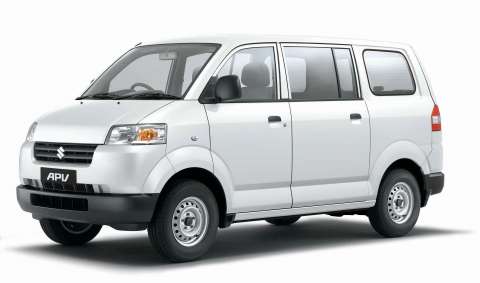
Suzuki APV Car Top Engine Series


Suzuki APV Car Top Engine Series
Suzuki APV (All Purpose Vehicle) is Suzuki's budget MPV designed in Japan and assembled in Indonesia by PT. Indomobil Suzuki International (a subsidiary of Suzuki).

At November 2007, Suzuki released the improved APV named APV Arena (APV Type II in some countries). It offers more luxurious features with the Luxury/SGX type as the flagships (captain seat version). Not just doing some facelift in exterior but also the interior is changed as well an improvement in engine performance. The APVs are exported to countries like Australia, Algeria, Aruba, Chile, India, Malaysia, Singapore, Brunei, Pakistan, Thailand and the Philippines.
Suzuki APV in use at an airport.
Manufacturer PT. Indomobil Suzuki Intl.
Production 2004–present
Predecessor Suzuki Carry, Suzuki Every
Class Compact MPV
Body style(s) Semi-bonneted Minivan
Platform Ladder Frame
Engine(s) G15A (1493 cc), G16A (1,590 cc) 16 valve MPi Inline 4, 92 bhp (69 kW) and 127 N·m
Transmission(s) 5-speed manual and 4-speed automatic
Wheelbase 2,625 mm (103.3 in)
Length 4,155 mm (163.6 in)
Width 1,655 mm (65.2 in)
Height 1,840 mm (72.4 in)
Curb weight 1,270 kg (2,800 lb)
Fuel capacity 43 L (9.5 imp gal; 11.4 US gal)
Related Mitsubishi Maven